

Compactness in attack is one of football’s most powerful tactical concepts, yet it’s often misunderstood. Keeping small distances when having the ball isn’t just about being close—it’s about staying connected. When players move as one compact unit, passing becomes faster, moving forward becomes quicker, and control the game comes effortless.
Teams like FC Barcelona and Manchester City, Brighton under De Zerbi, Napoli under Mauricio Sarri and Ajax have built entire systems around this concept. By staying close, they dominate both the ball and the tempo. Compactness reduces turnovers, creates triangles for passing, and makes it easier to press when possession is lost. In short, space is managed collectively, allowing the team to control every phase of play.
Table of Contents
The Tactical Foundation of Close Player Distances
In modern football, structure and spacing define how effectively a team plays. Compactness ensures that every player has at least two short passing options, minimizing the risk of isolation. When lines stay 8–15 meters apart, the team operates as one organism—ready to attack, defend, or transition instantly.
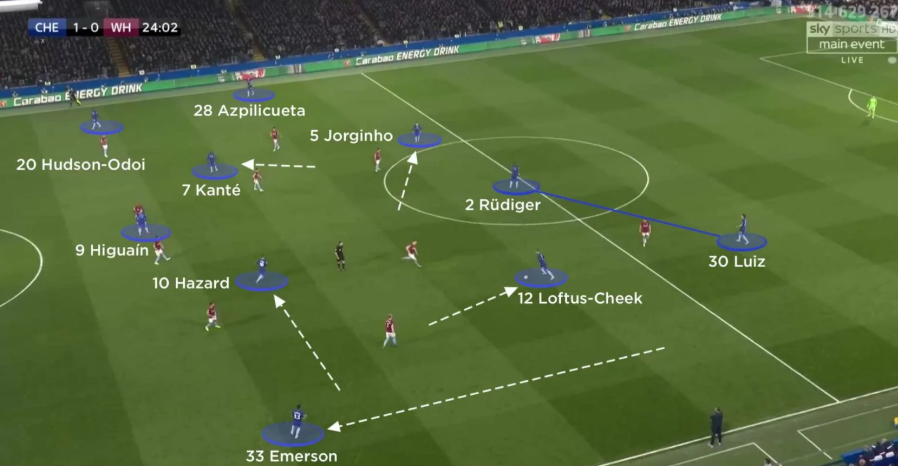
This principle lies at the heart of positional play (Juego de Posición), where maintaining small, organized distances allows players to move the ball through small, controlled zones. Compactness also supports counter-pressing; when possession is lost, nearby players can immediately apply pressure and regain the ball before the opponent can counter.
Over time, football evolved from long-ball chaos to controlled compactness. Visionary coaches like Johan Cruyff, Guardiola, De Zerbi, Sarri, Arteta and Klopp have proved that success depends not on how much space you cover but on how intelligently you occupy it.
Advantages of Maintaining Small Distances When having the ball
Improved Passing and Ball Circulation
Short distances equals short passes—more accurate, quicker, and safer. The ball moves faster than the opponent can press, making it hard to disrupt possession. Compact spacing helps create triangles and diamonds, ensuring that every player has more than two or three passing options. This rhythm of tight, constant passing builds momentum and fast tempo.
Enzo Mareska thrived at Leicester City, leading them to promotion to the Premier League before moving to Chelsea. His time as Pep Guardiola’s assistant at Manchester City gave him the opportunity to understand how maintaining small distances between players when having the ball provides a tremendous tactical advantage. Now at Chelsea, he is building his own playing philosophy around that principle—implementing a dynamic box-in-the-middle and overloading central areas to dominate possession and control matches.
Build Support and Team Cohesion
Compactness when having the ball strengthens team chemistry. Players in close distances communicate more, anticipate movements, and instinctively support each other. When under pressure, having nearby teammates encourages composure rather than panic. A compact team doesn’t rely on long, risky passes—it plays through collective game.
Quick Transitions and Counter-Pressing
When the team loses possession, small distances mean immediate press on the ball. Players are close enough to react fast and win the ball back, limiting counter-attacks. This is the foundation of Gegenpressing, the aggressive pressing system perfected by Klopp’s Dortmund and Liverpool. Compactness ensures that even mistakes become opportunities.
20 Build-Up Drills in Football is your go-to guide for learning how to play out from the back with confidence and control.
- Build Up Through the Zones
- Progress Through the Lines
- Attack Using Small-Sided Games
- Play Through the Central Channels
- Use a Double Pivot
- Build Up Against Different Defenses
- Inverted Full-Backs and Positional Rotations
- Adapt Your Formation
- Overcome Pressure
The Psychological Impact on Players
Being in close proximity having the ball makes the game simpler for the layers to read it. With teammates close, players make faster, more confident decisions. They don’t have to scan long distances or guess passing options—they can rely on structure and rhythm.
It also builds trust. When players are connected, communication flows naturally—through words, gestures, or even instinct. Compactness fosters confidence because everyone feels supported. It’s both a tactical and emotional advantage: a team that plays compactly plays together.
How Small Distances Influence Team Shape and Dynamics
Compactness in Offense and Defense
Compactness shapes both phases of play. In attack, it ensures fluid combinations and quick ball progression. In defense, the same structure allows instant pressing and recovery. Teams that attack compactly also defend compactly—the transition between phases becomes seamless.
Maintaining Width Without Losing Compactness
Compact doesn’t mean narrow. The best teams expand and compress intelligently. When the ball moves wide, nearby players shift as a group, maintaining tight vertical distances while still stretching the field horizontally. This “accordion effect” ensures balance between width and connection.
Training Methodologies to Teach Compact Possession
Rondos and Positional Games
Rondos and Positional Games are the DNA of compact football. In tight areas, players learn to move, pass, and support under pressure having the ball. These drills improve awareness, speed, and rhythm while building spacing habits. Positional games—like 4v4+3 or 4v4+4—replicate real match conditions where compactness determines success.
Below is an example of a Positional Game in which one team acts as defenders with the aim of winning the ball and scoring in the small goals, while the other two teams aim to maintaining possession. To reinforce positional behavior and encourage short distances between players when having the ball, one rule of the game is that the team in possession must complete three passes inside a small square before switching to another box to score a goal. They may switch boxes at any time if under heavy pressure and lacking nearby options to retain possession, but in that case, the goal will not count.
Although the above rule for the attacking team is not very realistic, it forces the team in possession to communicate and bring players into close proximity in order to complete three passes inside a small square to score a goal.
Small-Sided Games (SSGs)
SSGs naturally teach compactness because the field and player numbers are smaller. Games like 5v5 or 6v6 force players to stay connected and think faster. Coaches can adjust touches on the ball or reward sequences of short passes to reinforce tight structure and teamwork.
Progressive Match Drills
Once players understand the concept of close distances having the ball, drills must mirror match intensity. Transition games—where teams shift from possession to attack after several passes—help players connect compact buildup with real attacking moments. Compactness becomes a habit, not a command.
Common Mistakes Coaches Make
Overcrowding the Ball
Compactness is not clustering. When too many players move toward the ball, the team loses width and becomes predictable. True compactness having the ball keeps players close but spread logically, forming triangles around the ball—not crowds.
Losing Width and Depth
Some teams become so narrow that they lose structure entirely. Width stretches opponents; depth breaks lines. Compact teams maintain both by adjusting positioning dynamically. Every player must balance connection with spacing to keep the shape breathable and flexible.
How Elite Teams Apply Compact Possession
Guardiola’s Manchester City
City’s brilliance lies in positional symmetry. Their midfielders stay close enough to support quick combinations while wingers hold width. Fullbacks or even center backs get in the middle to shorten central distances, ensuring every line stays within 10–12 meters. Compactness gives them total control, enabling short passing and immediate pressing.
FC Barcelona’s Tiki-Taka
Barça’s golden era showcased compact artistry. Xavi, Iniesta, and Busquets operated within tight triangles, circulating the ball effortlessly. Their short passing rhythm—supported by narrow spacing—made them nearly impossible to press. Compactness gave them control and allowed for instant counter-pressing after losing possession.
“Do you know how Barcelona win the ball back so quickly? It’s because they don’t have to run back more than 10 meters as they never pass the ball more than 10 meters.”
– Johan Cruyff
Klopp’s Liverpool
Liverpool’s compactness fuels intensity. Their forwards and midfielders stay tightly linked, ensuring that when possession changes, they can swarm the ball instantly. This compact aggression turns transitions into opportunities and defines their high-energy identity.
Measuring and Analyzing Team Compactness
Using GPS and Data Tracking
Technology now allows coaches to measure compactness with precision. GPS and cameras with the ability data tracking reveals average distances between players, team width, and line spacing. When numbers widen, it signals fatigue or disorganization. Compactness is no longer abstract—it’s quantifiable.
Key Spacing Metrics
| Metric | Definition | Ideal Range |
|---|---|---|
| Team Length | Distance from defense to attack line | 25–35 m |
| Team Width | Lateral spacing across the pitch | 35–45 m |
| Line Distance | Gap between defensive, midfield, and attack lines | 8–12 m |
| Player Proximity | Distance to nearest teammate | 8–15 m |
In our days football platforms such as HUDL and Wyscout, offers multiple metrics regarding positioning that can help coaches identifying gaps in their team’s positional structure.
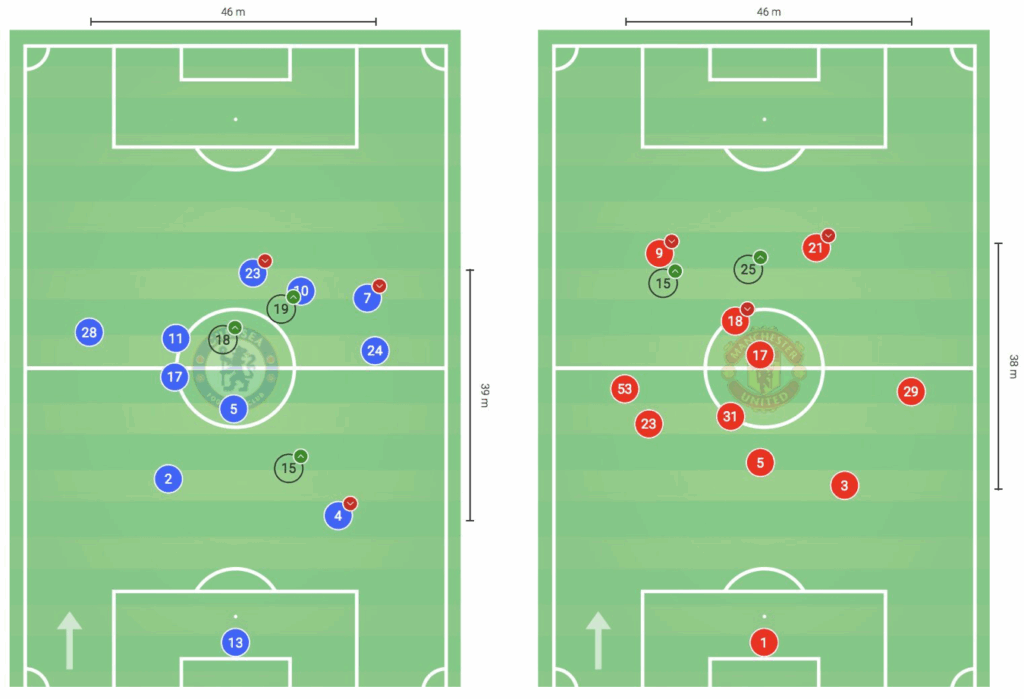
Analyzing these metrics helps coaches balance compactness with tactical flexibility, ensuring that spacing supports the game plan rather than restricting it.
Adapting Compactness Across Different Formations
4-3-3 vs. 3-5-2 Compactness
The principle remains the same, but its execution differs.
- In a 4-3-3, midfield triangles and inverted fullbacks maintain compact central areas while wingers stretch the pitch.
- In a 3-5-2, the midfield five and two strikers keep central density, shifting laterally to maintain unity.
Both systems rely on understanding distances and moving collectively, not individually.
Role-Specific Compactness
Every position contributes:
- Center-backs anchor the structure.
- Fullbacks/wing-backs connect lines.
- Midfielders manage rhythm and angles.
- Forwards lead pressing while staying close to midfielders.
Compactness works when all lines communicate and move as one compact wave.
Balancing Compactness and Creativity
Freedom Within Structure
Compactness shouldn’t cage creativity—it should support it. Coaches must allow players freedom and fluidity within a defined framework. Positional rotations, intelligent movements, and dynamic attacking actions keep the structure intact while encouraging spontaneity.
Individual Brilliance in Compact Systems
Stars can still shine within compact systems. A dribbler can take risks knowing teammates are near for recovery; a playmaker can attempt bold passes with support behind. Compactness provides the security net for creative freedom—allowing expression without losing discipline.
Conclusion – The Essence of Unity in Possession Football
Compactness turns a group of players into one thinking unit. It improves passing, transitions, and confidence while building the foundation for creativity and control. Whether it’s Guardiola’s precision or Klopp’s energy, the principle stays the same—stay close, stay connected, stay in rhythm.
When a team moves as one compact structure, it doesn’t just control the ball—it controls the game.
FAQs
1. Why are small distances important in possession?
They improve passing speed, support, and pressing transitions while reducing turnovers.
2. How do you train compactness?
Through rondos, small-sided games, and positional drills focused on spacing and awareness.
3. What’s the ideal player distance?
Around 8–15 meters, depending on team structure and phase of play.
4. Which teams best exemplify compact football?
Manchester City, Barcelona (2010 era), and Liverpool under Klopp.
5. Can compactness be taught at youth level?
Yes. Teaching it early helps young players understand teamwork, spacing, and decision-making.
