

Have you heard the term “Box in the Middle”?
Modern football is full of creative ideas and smart tactics. One method that many top teams are using today is called the “Box Midfield” or sometimes “Box in the Middle”. It’s a shape used by coaches to help their team control the game, especially in the center of the pitch.
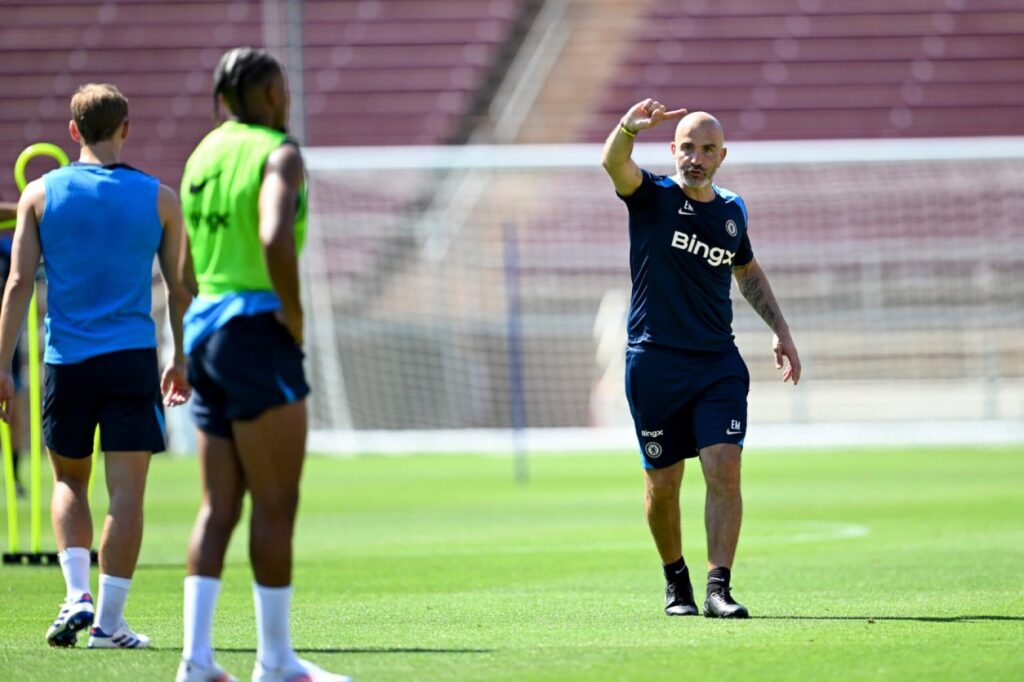
This tactical approach was fully displayed by Maresca at Chelsea, ending the season with a trophy, even though domestically they were eliminated in the fourth round of the FA Cup.ex
The Blues claimed a historic 3-0 victory over Paris Saint-Germain in East Rutherford to win the first edition of FIFA’s revamped Club World Cup. Football manager, Enzo Maresca, who took charge just a year ago, called the triumph as meaningful as a Champions League win, praising his team’s dominant first-half display that saw goals from Cole Palmer (2) and Joao Pedro seal the title.
This article will explain the box midfield tactic in simple terms, show how it works, why managers use it, and what coaches and players need to know to play it well.
Table of Contents
What is a Box in the Middle?
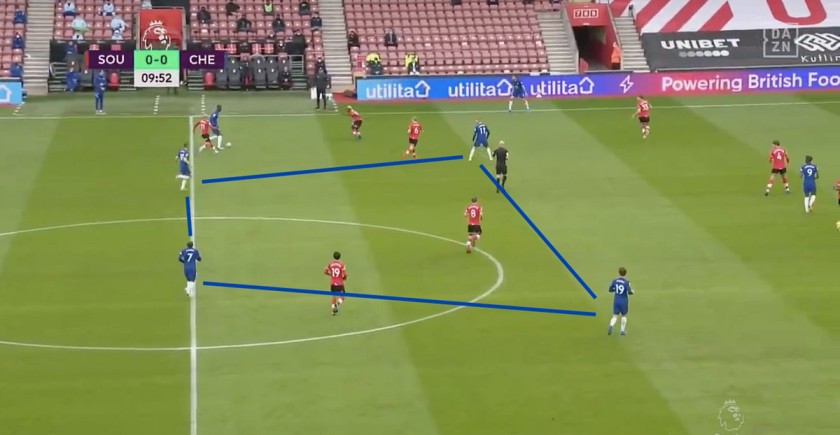
Imagine a square or box-shaped formation which includes four midfielders in the center of the field. Two of them assist the defense by playing deeper. The other two are nearer the strikers and more advanced.
The team has strength in the middle thanks to the Box in the Middle setup. Players may pass the ball more quickly and have better control when attacking or defending thanks to the box.
Why Use a Box Midfield?
Here are the main reasons soccer coaches use the a box in the middle football:
- Control the Center – Most teams try to win the midfield battle. The box gives your team more players in that area.
- Create Passing Options – Four midfielders can pass in triangles and diamonds, which makes it easier to keep the ball.
- Overload Opponents – If the other team uses only two or three midfielders, your four players can outnumber them.
- Better Pressing and Defense – When the team loses the ball, the box shape helps win it back quickly due to the smaller distances between the players and the more compact shape.
Forming the Box Dynamically
The Box in the Middle doesn’t always have to start with a fixed formation like 3-2-2-3. In many modern teams, the box is created during the flow of the game. This is called dynamic formation, where players move into positions to form the box depending on the situation.
For example:
- A full-back might step into midfield (inverted full-back), joining the defensive midfielder to form the deeper part of the box.
- An attacking midfielder might drop slightly deeper, while a winger or wide midfielder drifts inside to become the second advanced midfielder.
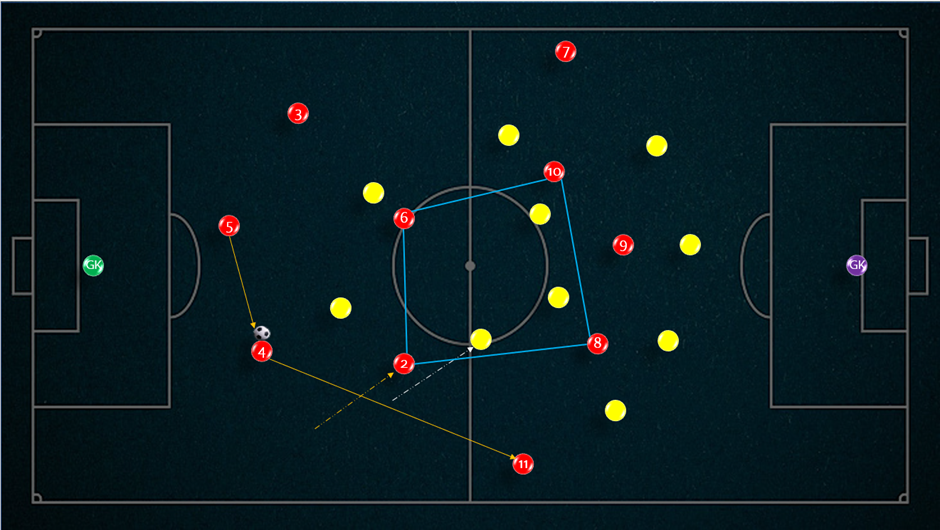
This way, the box is not always visible on a tactics board before the game. Instead, it appears during the game based on movement and decision-making.
This kind of box is flexible and can adapt to different phases of play:
- In possession – It gives passing lanes and options.
- Out of possession – It allows for compact pressing.
Examples from Top Teams
- Chelsea – Under Enzo Maresca, Chelsea have adopted a flexible 3-2-5 formation built around control and attacking width. Featuring a back three, a double pivot, and five across the front, it’s a variation of the 3-box-3 or 3-2-2-3 shape. The double pivot adds stability and supports a composed build-up, while the central midfield “box” creates central overloads, making it easier to bypass pressure. Maresca adjusts his setup based on the opponent, and during defensive transitions, Chelsea aim to maintain their shape and press quickly to regain possession.
- Manchester City – Pep Guardiola often moves a full-back like John Stones into midfield to form the box or previously used inverted full-backs to fill the middle. He regularly uses a 3-2-2-3 shape that helps control the ball and dominate possession.
- Brighton – Under Roberto De Zerbi , Brighton impressed in the Premier League used to build up play from the back with a 4-2-2-2 box midfield. The team moves the ball quickly through the middle and attacks in numbers.
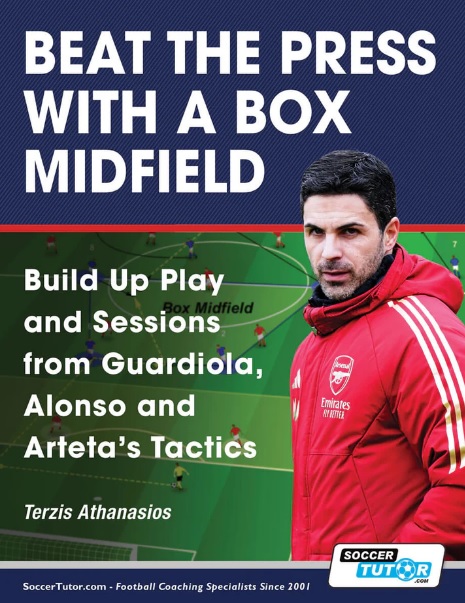
Build Up Play and Sessions from Guardiola, Alonso and Arteta’s Tactics
- Build Up Through the Zones
- Play through high presses using structured box midfield rotations
- Create overloads in key areas to break pressure and progress play
- Exploit space with coordinated movements and passing combinations
- Build from the goalkeeper into the final third with control and intent
Dynamic Box in the Middle formation is also context-specific. It can form only during certain phases of possession—such as the build-up from the back or when trying to break down a low block. It can also be triggered by opponent positioning: if the opposition presses with two forwards, a center-back or full-back might step into midfield to form the numerical advantage needed.
Additionally, this dynamic box can even be asymmetrical. For example, instead of a perfect square, it might tilt to one side depending on which full-back inverts or which winger drifts in. Coaches use this to manipulate the opponent’s shape and create space on the opposite side.
What matters most is player understanding. The success of a dynamic box relies on players recognizing cues—such as the timing of movement, the positioning of teammates and opponents, and knowing when to fill or vacate zones. This demands tactical awareness and constant communication on the pitch.
It can be understood that against teams with aggressive pressing, forming a box in the middle through rotation is not easy due to the lack of time and space. There is a risk of losing the ball during these rotations, which can expose the team to fast counterattacks.
To train this effectively, coaches should focus on:
- Position-specific triggers (e.g., when full-back receives in certain areas, midfielders adjust positions)
- Opposition level of pressure (i.e. high pressing, passive zonal defence etc.)
- Patterned rotations to maintain structure
- Realistic game simulations where the box must be created on the fly under pressure
In dynamic systems, the box is not a solid shape—it’s a flexible framework that appears and disappears depending on need. This makes it harder to predict and defend against, especially for teams relying on man-marking or zonal compactness.
How the Box in the Middle works in Attack
By using two deeper “midfielders” (also called pivots) to stay behind the ball, the attacking team manages to recycle possession and have a defensive balance when the ball is lost. The two advanced midfielders move into spaces between the opponent’s defense and midfield. This helps them receive the ball and create chances.
The box can be used in different formations like:
- 3-2-2-3
- 4-2-2-2
- 3-4-2-1
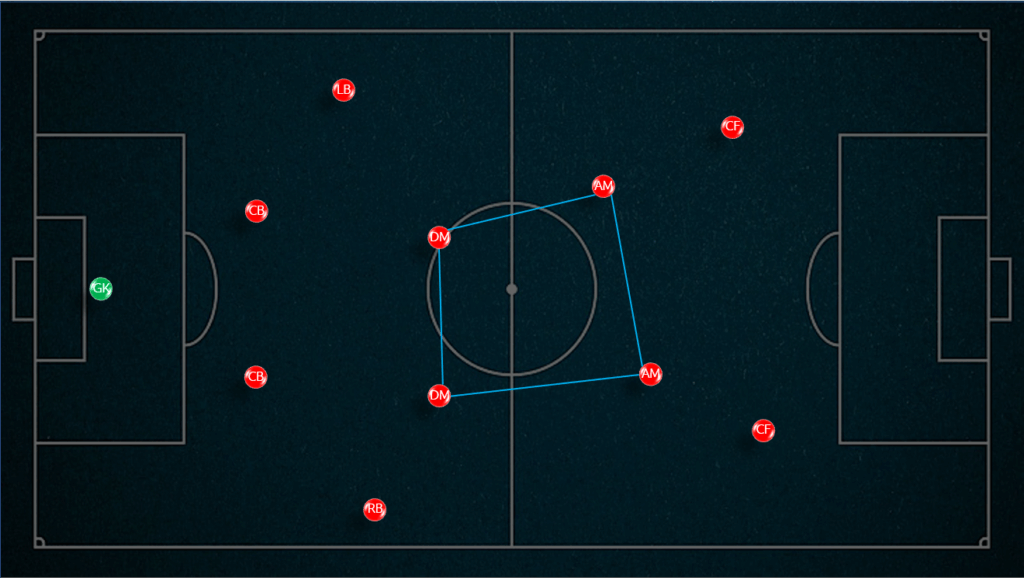
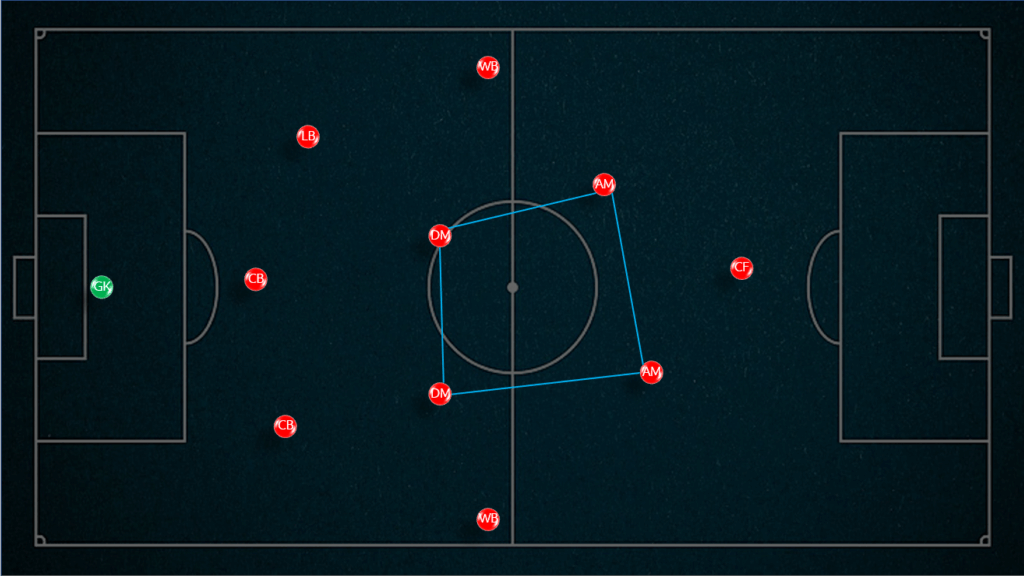
The Box in the Middle offers multiple advantages when a team has possession. Here’s how it helps in attacking phases:
1. Central Overloads
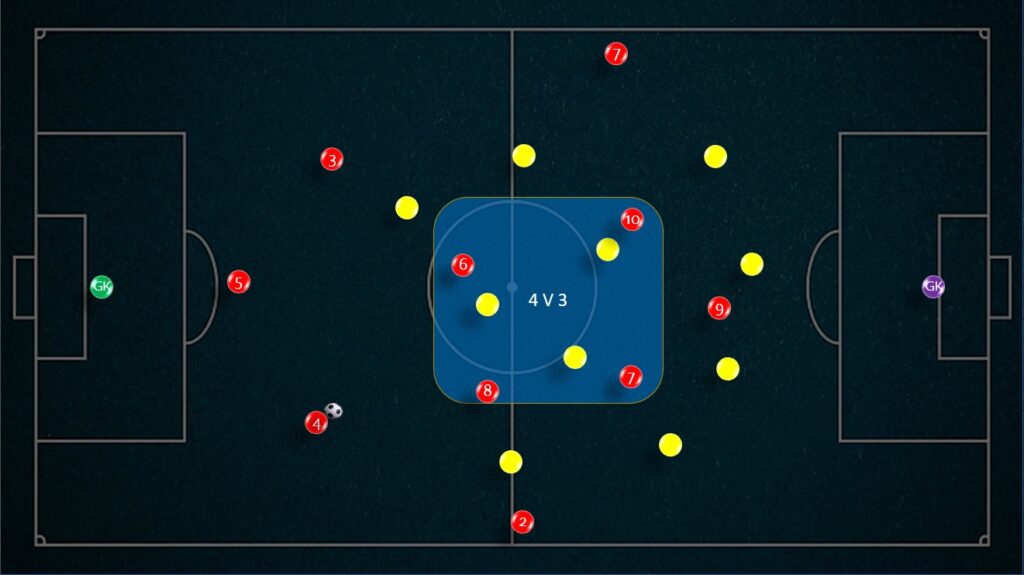
With four players in midfield (two deeper and two advanced), the box in the middle shape often gives your team a 4v3 or even 4v2 advantage in central areas. This makes it easier to bypass a midfield press and progress the ball.
Example: A 4-3-3 opponent usually only has three midfielders. Your four midfielders inside the box can outnumber them, create angles for passes, and combine to move forward.
2. Access to Half-Spaces
The two attacking midfielders in the box usually position themselves in the left and right half-spaces—between the opponent’s full-back and center-back. These areas are hard to defend and ideal for receiving on the turn.
Coaches often call this the “golden zone” for creating chances. From here, players can play crosses, through balls, or even shoot when using players with reverse foot.

3. Support for Full-Backs and Wingers
When wide players stretch the field, the central box gives them inside options to play off. A full-back can overlap knowing there’s an advanced midfielder inside to combine with. This also prevents isolation on the wings.
4. Quick Ball Circulation and Diagonal Passes
Because the midfielders are arranged on different vertical and horizontal lines, they can play diagonal passes easily. This keeps the ball moving and shifts the opponent’s block. It’s especially useful when trying to break down a deep block.
5. Attacking Flexibility
The shape allows fluid rotation:
- One of the deeper midfielders can push forward.
- One of the attacking midfielders can drift wide or drop.
This constant movement confuses defenders and pulls them out of position.
Example: This tactical approach is prominently displayed in Guardiola’s Manchester City, where players like Bernardo Silva and Kevin De Bruyne, as well as previous seasons’ Joao Cancelo or Kyle Walker as an inverted full-back, frequently rotate through the advanced areas of the box. This movement effectively drags defenders out of position and creates openings. Another notable example is Mikel Arteta, who has used Oleksandr Zinchenko as a false full-back to create a crowded box in the middle and maintain high ball possession percentages. Chelsea also demonstrated this strategy, ending the season with a trophy, despite being eliminated in the fourth round of the FA Cup.

How the Box Helps in Defense
While it’s an attacking structure, the box in the middle is also extremely helpful when the team loses the ball or is defending in shape.
1. Central Compactness
Because the midfield box occupies central zones, it creates instant compactness once the ball is lost. This allows for quick counter-pressing (also called “gegenpressing”).
2. Cover Behind the Ball
The two deeper midfielders in the box can quickly drop into the backline or shield it, preventing fast transitions through the middle. This is especially effective when full-backs have gone high and space is left behind.
3. Rest Defense Structure
In advanced possession phases, the box links to the defensive line to form a rest defense. The two deeper midfielders often remain close to the center-backs, forming a 2+2 screen that can intercept long clearances or second balls.
4. Forcing Wide Play
The compact central structure, particularly when the central box is formed by positioning rather than being dynamic, forces opponents to play wide. This makes it easier to isolate them and press as a united front. The midfielders can shift laterally together to steer the play toward the touchline.
5. Zonal Awareness and Interceptions
With players occupying vertical lanes, the box midfield is well-positioned to intercept diagonal passes and block access to central forwards.
This is particularly useful against teams that try to play between the lines. The advanced midfielders can screen passes into the striker, while the deeper ones track runners.
Strengths of the Box Midfield
To summarise what is mentioned above, here are the pros and cons when using a midfield box.
| Strength | Description |
| Control | More players in midfield means better control of possession |
| Passing Options | Triangles and diamonds help keep the ball moving |
| Compact Shape | Good for pressing and staying organized |
| Flexible Roles | Midfielders can rotate and cover for each other |
Weaknesses of the Box in the Middle
| Weakness | Description |
| Less Width | Needs full-backs or wingers to stretch the play |
| High Demands | Midfielders must be smart, fit, and tactically aware |
| Risk of Overcrowding | If too many players stay central, the team can become predictable |
How to Coach the Box Midfield
If you’re a coach, here are some tips to train your team to use a box in the middle:
- Teach Positioning – Players must understand when to push forward or drop deeper. Use video clips and freeze frames in training to show ideal distances and height between the midfielders. Reinforce the idea of vertical staggering and horizontal spacing.
- Use Small-Sided Games – Practice 4v3 or 4v2 to work on overloads and quick passing. These games help players make decisions quickly under pressure. You can also add conditions like limited touches to sharpen awareness.
- Encourage Rotation – Midfielders should move and switch roles to confuse the opponent. For example, a deeper central midfielder can make a late forward run while an advanced midfielder covers. Rotations should be rehearsed so that shape is always maintained.
- Build Awareness – Teach players to scan the field and make smart decisions. Use drills like rondos or scanning exercises where players must react to visual signals while in possession.
- Work on Transitions – Practice how to react when losing or winning the ball. Use transition zones in training to emphasize quick recovery runs or forward sprints. The box shape should quickly shift from build-up to pressing mode.
- Wide Support Training – Since the box is narrow, full-backs or wide players need to know when to push high or invert. Include exercises that simulate switches of play and force outside support to join or stretch the box.
- Game-Like Scenarios – Set up attack vs. defense situations with numerical advantages (e.g., 6v5 in midfield) to simulate real match dynamics. Let players discover when the box helps and when it needs reshaping.
- Video Analysis – Review matches and training footage with your players. Pause and highlight how the box was formed, when it broke down, and where improvements can be made.
Conclusion
The box midfield is a powerful strategy that gives teams more control, better passing, and stronger pressing in the center of the pitch. It’s used by top coaches and can work at all levels with the right players and training.
Whether you’re a coach, player, or analyst, understanding the box midfield can help you see the game in a smarter way. Try spotting it in the next match you watch—and see how it changes the way a team plays.
If you’d like to learn more, we can provide training drills, video analysis, or case studies of specific teams using this shape. Just let us know!
