

Football is a game of numbers—and emotions. Every weekend, coaches are judged by scorelines, trophies, and win percentages. Yet, as the sport evolves into an era of analytics and philosophies, one question keeps resurfacing:
Who is the successful coach?
Is success defined by the silverware on the shelf, or by the style, progress, and performance that define a team’s identity?
In debates about what defines a truly successful coach, names from across eras and leagues are often mentioned—not just for the trophies they lifted, but for the philosophies and identities they built.
In English football, figures such as Bob Paisley and Matt Busby are celebrated not merely because they collected league titles or lifted the FA Cup, but because they reshaped their clubs’ cultures and left legacies that lasted long after their retirements. Their success invites a deeper question: is greatness measured by medals alone, or by the enduring impact a coach has on players, supporters, and the wider game?
This question becomes even more complex when we look beyond England. Across La Liga, coaches like Diego Simeoneat Atlético Madrid and leaders who shaped FC Barcelona show that success can take many forms—whether it’s winning the UEFA Cup, building a globally recognized style of play, or consistently elevating a team beyond expectations.
These contrasting examples highlight that greatness in football management may lie not only in silverware, but in vision, identity, and the ability to transform a club’s trajectory.
Table of Contents
The Traditional Measure of Success: Winning Trophies
For over a century, football has crowned its kings through trophies. Cups, leagues, medals—these have always been the tangible proof of greatness. Managers like Sir Alex Ferguson, Pep Guardiola, Carlo Ancelotti former coach of AC Milan and Real Madrid and José Mourinho built their reputations on glory. Winning a Champions League trophy, a Super Cup, a Coppa italia, a club world cup, a league cup or even a less know trophy like a scottish cup, or a title with Boca Junior, may be a huge milestone for a coach’s career and Jose Mourinho built their reputations on glory.
Winning a Champions League trophy, a Coppa italia, a club world cup, a league cup or even a less know trophy like a scottish cup, or a title with Boca Junior, may be a huge milestone for a coach’s career
Winning the Premier League, probably the toughest football competition in the world, and the Champions League more than once has placed them among the greatest managers in history.
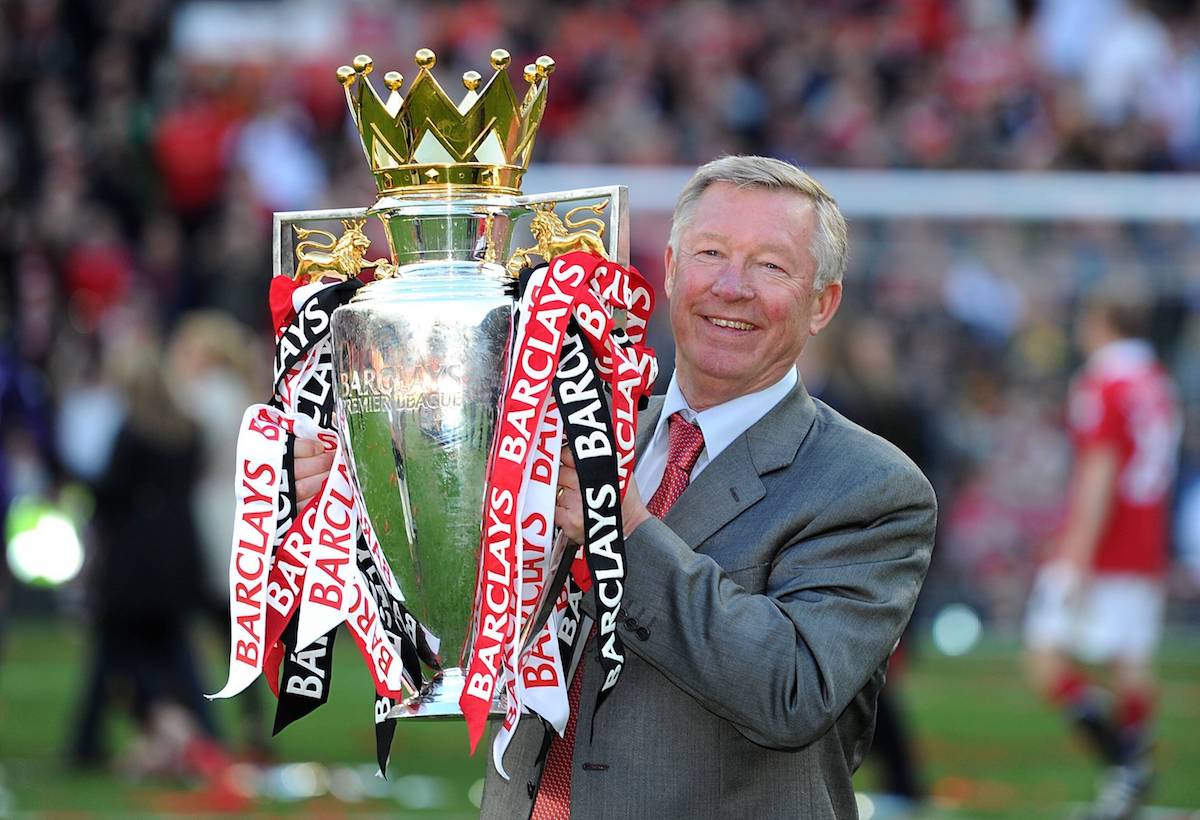
Ferguson’s Manchester United dynasty is the ultimate example of dominance. Thirteen Premier League titles, two Champions Leagues(Club’s European Championship), five FA Cups, four League Cups and a culture of winning that defined an era.
Vince Lombardi is the Sir Alex Ferguson of American Football. He is considered by many to be one of the best and most successful coaches in professional American Football history.
He is best known as the head coach of the Green Bay Packers during the 1960s, where he led the team to five NFL championships in seven years, in addition to winning the first two Super Bowls following the 1966 and 1967 NFL seasons.
He never had a losing season as a head coach in the NFL, succeeding regular seasons winning percentage of over 72% and 90% for an overall record of 105 wins, 35 losses, and 6 ties in the NFL.
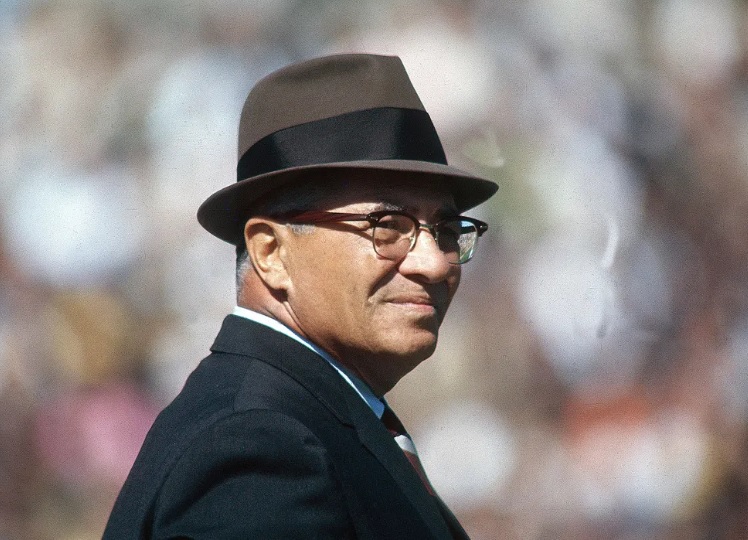
40 years after his death, Vince Lombardi remains one of the most recognisable American sports figures of all time.
Winning is not a sometime thing; it’s an all time thing. You don’t win once in a while, you don’t do things right once in a while, you do them right all the time. Winning is habit. Unfortunately, so is losing.
Vince Lombardi
Mourinho took a different path than his ex-football players colleagues, but with similar results. From Porto to Inter Milan and Chelsea, he delivered instant success through discipline and tactical precision. His “Special One” aura was built on results—because in his world, success without silverware simply didn’t exist.
And then there’s Guardiola, the philosopher-winner. His Manchester City and Bayern Munich has dominated English Premier League with both trophies and eye-catching football implementing his famous Positional Play (in simple words the evolution of the Rinus Michels’ Total Football), which he learned from the famous Johan Cruyff, which he learned from the famous Johan Cruyff. He’s proof that a coach can win beautifully and methodically, turning performance into a trophy machine.
But for every Guardiola, there’s a Bielsa. For every Ferguson, a Sarri. For every Mourinho, a De Zerbi. Football has evolved to realize that not every masterpiece needs a medal. For every serious winner coach there is a romantic one who can also be considered as a successful coach.
When Performance Speaks Louder Than Results
The modern game has produced coaches whose success can’t be measured by trophies alone. Their greatness lies in transformation—in creating teams that play with identity and purpose.
Take Marcelo Bielsa. His methods—relentless pressing, positional play, and tactical intensity—reshaped modern football. His ideas on the third man, the fluidity during the game, and the intensity of his teams have shown how the game should be played.
Guardiola himself said, “He is the best coach in the world”. Despite a modest trophy record, Bielsa’s influence shines through Guardiola, Pochettino, and countless modern managers.
Another example is Maurizio Sarri. His Napoli team from 2015 to 2018 didn’t win Serie A, but they played some of the most breathtaking football Europe had seen in decades. Their “Sarri-ball” style—short passing, rhythm, and bravery—redefined aesthetics in Italian football.
And now, Roberto De Zerbi’s Brighton and Marseille show how performance can outshine prestige. His tactical intelligence, his love for ball control, and innovation have turned Brighton into a Premier League marvel and Marseille to a serious Ligue 1 contender—without the resources of the giants. His football wins admiration even when results don’t.
20 Build-Up Drills in Football is your go-to guide for learning how to play out from the back with confidence and control.
- Build Up Through the Zones
- Progress Through the Lines
- Attack Using Small-Sided Games
- Play Through the Central Channels
- Use a Double Pivot
- Build Up Against Different Defenses
- Inverted Full-Backs and Positional Rotations
- Adapt Your Formation
- Overcome Pressure
These men remind us that football isn’t just about outcomes—it’s about evolution. They didn’t just coach teams; they built blueprints for the sport’s future.
The Limitations of Judging by Win Percentage
Win percentage can be deceiving in regards who is a successful coach. It doesn’t tell you the story behind the score. A 60% win rate for Guardiola at City isn’t the same as a 60% for Emery at Villarreal or De Zerbi at Brighton. Context matters.
Tuchel’s case at Chelsea illustrates this perfectly. He won the Champions League in 2021, becoming an instant hero. Yet, within a year, he was sacked. Not because he stopped winning—but because his methods no longer aligned with the club’s long-term vision.
Similarly, smaller clubs with visionary coaches often operate on different scales of success. For Villarreal, Emery’s Europa League triumph in season 2020-2021 meant as much as a Premier League title would for City. For Brighton, finishing top ten with exciting football is a success story in itself.
Football has reached a point where “how” you win and play matters as much as “what” you win.
The Data Revolution: Measuring Performance with Metrics
Analytics have revolutionized how football defines success. No longer do results alone dictate judgment—clubs now rely on Expected Goals (xG), Possession Value (PV), and Pressing Efficiency (PPDA) to uncover the truth behind the scoreline. These metrics show whether a team truly played well, even when the scoreboard says otherwise.
Take Arsenal under Mikel Arteta. Early in his tenure, the team lost several matches, yet data revealed clear progress. Their average xG per game in his first three seasons rose from 1.32 to 1.66 per match, and their finishing table position from 10th to 5th. Even during defeats, the metrics showed Arsenal’s system was evolving—a process that ultimately led them back into title contention.
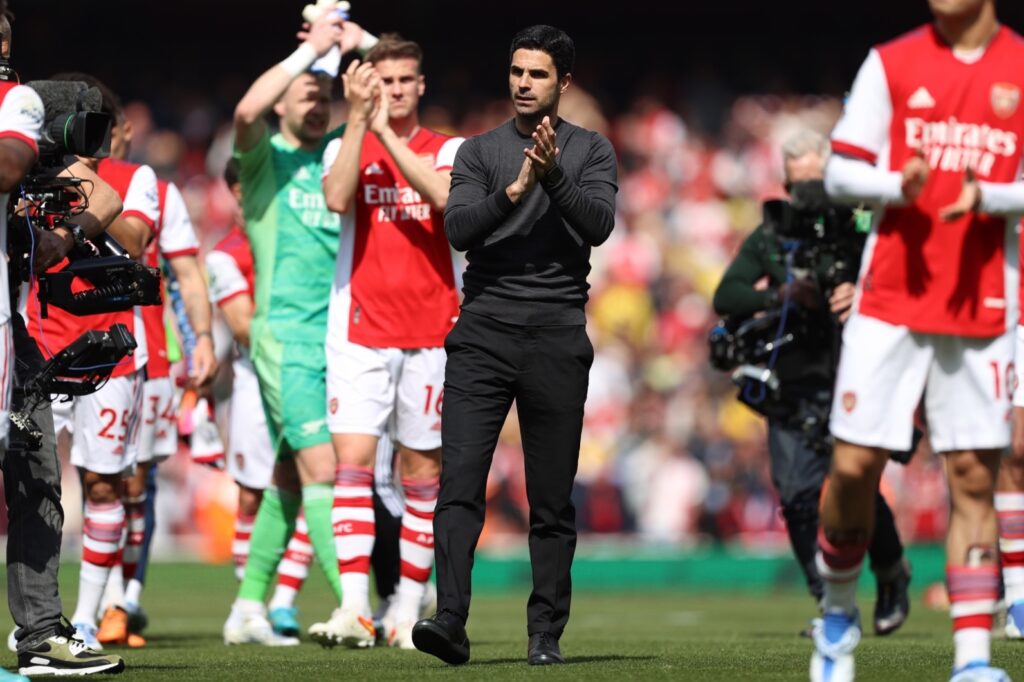
Source: onlinegooner
Take Marseille under Roberto De Zerbi, for example. In their first seven games this season, they’ve averaged 2.22 expected goals (xG) per game, compared to PSG’s 1.67. Their expected points (xPoints) stand at 14.71, while PSG’s are 13.16. That’s a significant gap, suggesting that although Marseille currently sit in second place, their performances are at a higher level. If they can maintain this form, there’s a strong chance they could overtake their rivals as the season progresses.
Put simply, De Zerbi is getting the most out of his squad. The performances are there—even if the results, which are not always within a manager’s control in football, haven’t fully reflected that yet.
Even at the highest level, numbers tell the real story. In Manchester City’s 3–1 Champions League defeat to Lyon (2020), xG showed 2.8 to 1.0 in City’s favor—a case of missed chances, not tactical failure.
Such examples prove that metrics can reveal progress hidden behind temporary setbacks. In modern football, performance data doesn’t just explain defeats—it predicts future success.
Philosophy vs. Practicality: The Eternal Coaching Dilemma
Every club must decide what they value more: immediate success or sustainable identity.
The instant-success approach brings short-term wins. Coaches like Mourinho or Antonio Conte can win trophies quickly but often leave behind burned-out squads and fractured dressing rooms.
The philosophy-driven approach takes time but builds legacy. Klopp’s Liverpool, Guardiola’s City, and Arteta’s Arsenal are proof that patience brings dominance. These clubs invested in systems rather than shortcuts.
When Liverpool appointed Klopp, they finished eighth. Three years later, they were European champions. It wasn’t just recruitment—it was evolution powered by belief in performance metrics.
The best clubs now understand that success built on process lasts longer than success built on panic.
Fans, Emotion, and the Human Side of Success
While owners use spreadsheets, fans use their hearts. For supporters, football is about joy, pride, and belonging—not just numbers.
Think of Leicester City’s miraculous 2016 Premier League title. By metrics, it was an anomaly. But emotionally, it was a fairytale that captured global imagination. Ranieri’s smile, Vardy’s goals, Kante’s engine—it wasn’t data; it was destiny.
Contrast that with Napoli’s 2017 Sarri era. They didn’t win Serie A, yet their football made millions fall in love. The fans celebrated the way their team played, not just the scoreboard.
Football, after all, is emotion wrapped in structure. The perfect coach must balance the two—win hearts and matches alike.
When Winning Isn’t Enough: Lessons from the Greats
Mourinho and Ancelotti are fascinating case studies. Both serial winners, but their legacies tell different stories.
Mourinho’s early brilliance has given way to questions about adaptability. His defensive excellence, once revolutionary, now feels old-dated in a world chasing fluid, attacking football. Despite his trophies, he divides opinion.
Carlo Ancelotti, on the other hand, is timeless. He adapts, evolves, and connects with players. From Maldini and Nesta to Jude Bellingham and Luka Modric, every generation respects him. His calmness, empathy, and tactical flexibility make him a model for modern coaching longevity.
Their careers prove that winning defines moments, but adaptability defines eras.
So… Who Is the Successful Coach?
Maybe the answer isn’t a name—it’s a mindset.
A successful coach today is one who:
- Wins with authenticity.
- Uses data intelligently, not obsessively.
- Builds teams that outlast their tenure.
- Create teams with specific philosophy, culture and style of play
- Inspires all, the players, boardroom and the fanbase.
Pep Guardiola and Jürgen Klopp are modern archetypes—they blend emotion and analytics, art and science. But Bielsa, Sarri, and De Zerbi show that even without trophies, influence is immortal.
Greatness in football has evolved. A successful coach is no longer measured only by what he lifts, but by what he leaves behind.
Conclusion
Football success used to be a simple equation: trophies equal greatness. But the modern game demands something else. Winning is still vital, yet performance, identity, and vision have become equally powerful indicators of a successful coach.
The greatest coaches of our time prove that true success isn’t just about victory—it’s about creating something worth remembering. The fans may celebrate trophies today, but they’ll remember philosophies forever.
So, who is the successful coach? Or even better: Who is a Great Coach?
The one who changes how we see football itself.
FAQ
1. Can a coach be successful without trophies?
Yes. Coaches like Marcelo Bielsa, Roberto De Zerbi, and Sarri have influenced football deeply through philosophy, not just medals.
2. How do clubs measure success beyond wins?
Through metrics like Expected Goals (xG), passing efficiency, pressing intensity, and player development progress.
3. Why do some trophy-winning coaches lose reputation?
Because modern football values longevity, adaptability, and philosophy—traits that short-term success alone can’t sustain.
4. Which coach best represents modern football success?
Pep Guardiola combines results with metrics, identity, and influence, making him the perfect balance between art and achievement.
5. What ultimately defines football greatness?
Not just winning—but transforming. True greatness is building a legacy that inspires players, fans, and future generations.
